Knecht and Designori’s Reunion and Reconciliation at Waldzell
The Glass Bead GameKnecht and Designori’s reunion at Waldzell transforms an official encounter into a reconciliation between former friends and a renewed encounter between Castalia and the outside world. Their return to intimacy does not erase the pain of their earlier estrangement: it begins when Knecht welcomes Designori without ceremony, deepens through a visit that lets Designori observe the Magister’s daily work, and reaches its emotional turning point in an honest conversation about the past. For Knecht, the meeting is more than a personal recovery. He understands it as a call from beyond Castalia—and as the answering counterpart of a desire already stirring within himself.
Background and First Encounter
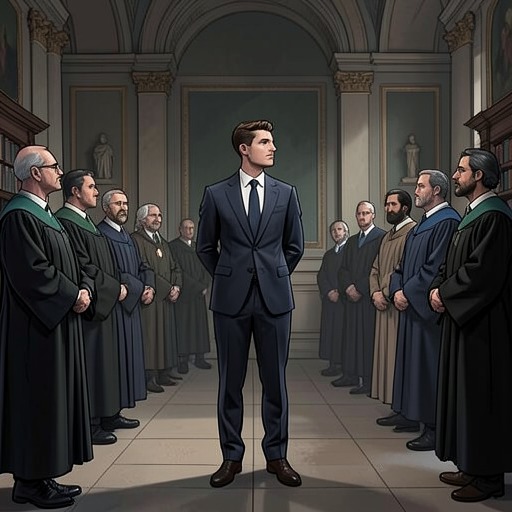
By the time Designori appeared again, Knecht had begun to consider how he might find his way into “fresher air.” His chance to see the outside world came through an official visit: Designori, once a guest pupil at Waldzell and now a member of the budget commission, attended a session of the Directorate of the Order in Hirsland. He was also a political writer and a member of the Chamber of Deputies. His return to the Province thus joined a private history to a public role, bringing one of Castalia’s former outsiders into contact with its leadership.
The men had not met for decades. As a student, Designori had been bright, sociable, self-assured, and eager to tease the secluded Castalians; Knecht remembered his charm alongside his worldly confidence. When they met again near the end of their student years, Knecht had found him diminished and shallow, and they had parted in mutual constraint. Now the old friend’s former exuberance had given way to reserve and sorrow. Knecht was struck by the change, but it did not repel him: he saw in Designori not the outside world’s easy laughter or self-confidence, but its suffering.
Welcome and Renewed Trust
At the official introduction, Knecht recognized Designori’s name before he recognized his face. He felt a pang at failing to identify his friend immediately, then set aside the formal greeting, omitted the prescribed bow, and held out his hand with a smile. Designori, by contrast, addressed him by his title. Knecht had to ask twice before Designori would return to the first names they had used as boys. That hesitation made the distance between them visible even as Knecht tried to bridge it.
Their early efforts at reconciliation were not presented as a single dramatic exchange. The account says that it cannot report in detail how Knecht gradually regained Designori’s trust; it describes him instead as steadily courting his friend, with the patient courtesy and affection for which he was known. Designori was no enemy of the Province. He admired the Order and had served it in the past, although he had given up the Glass Bead Game years earlier. His return nevertheless carried emotional weight: he seemed at first to avoid Knecht rather than seek him, while Knecht understood his presence and interest in Castalia as signs of continuing attachment.
Several months after their first encounter, Designori accepted Knecht’s repeated invitation to visit Waldzell. On a windy, overcast autumn afternoon, the two drove through alternating sunlight and shadow toward the place of their schooldays, then walked the old paths on foot, recalling classmates, teachers, and former discussions. The journey back through familiar surroundings brought memory into the present without pretending that the friends had remained unchanged. Knecht was cheerful; Designori’s mood shifted between the pleasure of return and the sadness of feeling alienated from the place.
Designori stayed for a day as Knecht’s guest and observed his official duties and routine hour by hour. That experience altered his understanding of the Province: he told Knecht that only now had he begun to glimpse again what Castalia was and what remarkable secrets it contained. He had thought about its inhabitants far more than Knecht knew, but had not been able to speak about what he had seen immediately. He also acknowledged that his reserve might have startled Knecht and promised, in turn, to invite him to his own native ground. The exchange made the reconciliation reciprocal: Designori was no longer merely the former pupil being welcomed into Waldzell; he offered Knecht a future passage into his world.
Revisiting the Earlier Estrangement
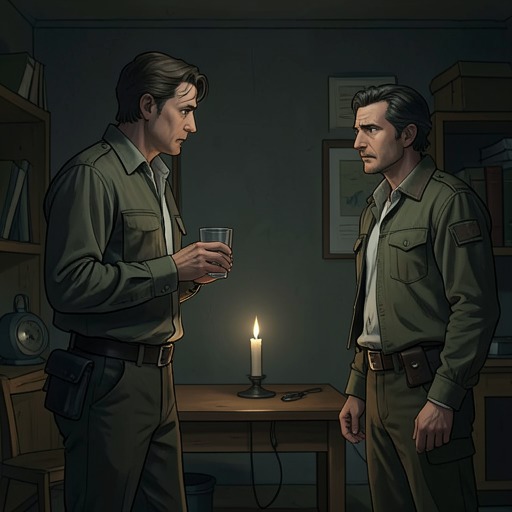
That evening, in Knecht’s living room, their conversation approached the intimacy of their youth. Designori later recorded it after returning home. In recounting an earlier visit to Waldzell, he remembered feeling that his belonging to Castalia had failed: his love for its people, his study of the Game, and their comradeship seemed to him to have counted for nothing. He had read Knecht’s courtesy as a polite dismissal and believed that the Magister had endured the evening out of obligation before sending him away.
Knecht listened without visible agitation, then accepted that Designori had recalled the episode accurately. He also offered a different account of what had made it fail. Designori, he said, had concealed the pain of the encounter behind a cheerful manner rather than admitting how difficult it was; Knecht, meanwhile, had been troubled by the contradiction between Designori’s underlying unhappiness and his outward bravado. Knecht acknowledged that he had instinctively rejected the claim Designori seemed to be making—to be treated as a Castalian and a Glass Bead Game player—even though Designori’s conduct did not, in Knecht’s eyes at the time, express the Castalian spirit. His politeness had indeed functioned as rejection, and Designori had not invented the hurt he remembered.
The new meeting differed because Designori no longer presented himself as someone claiming to belong to Castalia. Knecht found his worldly bearing, speech, and sadness acceptable, even beautiful and worthy of him. As he explained, the old encounter had placed him in the position of resisting Designori’s claim to fellowship; now Knecht was the one seeking closeness while Designori held back. Naming that reversal allowed the two men to recognize both the injury and the changed conditions that made renewed friendship possible. The reconciliation rested not on declaring the earlier pain mistaken, but on speaking plainly about each man’s part in it.
A Call Beyond Castalia
Knecht attached a significance to the reunion that extended beyond the recovery of an old friendship. As schoolboys, the two had represented, in their debates, the world outside and the Order within. Knecht now saw that contrast return in a changed form: Designori brought the suffering of the world rather than its gaiety or pleasure in power. Their meeting reopened the question of how the outer world and Castalia might be brought into synthesis, a question that had become newly urgent to Knecht.
He told Designori that the encounter mattered to him far more than the resurrection of their past. It was a kind of call, an approach from outside that opened a way into Designori’s world. Yet Knecht did not experience the call as something alien that he might accept or refuse at will. It answered a powerful desire already within him; the outward invitation and inward longing had become counterparts. The friendship therefore renewed an emotional bond while also giving form to Knecht’s growing wish to move beyond the confines of his official life.
Before they parted for the night, Knecht played a movement from a Purcell sonata, one of Father Jacobus’s favorite pieces. The playing was quiet and spare, with the old fountain audible in the yard. The music gave their conversation a composed ending, not a solution to the distance between Castalia and the world, but a moment of shared attention after difficult disclosures. When they said good night, Designori’s face had brightened, though his eyes were full of tears. The change registered what words alone had not settled: the reunion had restored enough trust for the friends to continue speaking, and for the approach between their two worlds to remain open.